
“ETQAAN” Authority Concludes a Workshop on The Use of Quality Indicators for TVET with Recommendations to Enhance Application
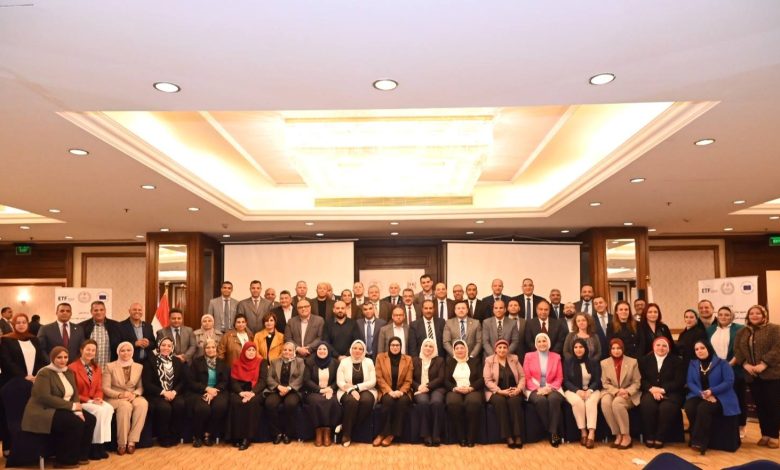










“ETQAAN” Authority Concludes a Workshop on The Use of Quality Indicators for TVET with Recommendations to Enhance Application
Chaired by Prof. Dr. Mohamed Mousa Emarah, chairman of the Egyptian TVET for Quality Assurance and Accreditation Authority (ETQAAN), the workshop organized by the Authority in cooperation with the European Training Foundation (ETF) concluded today, Tuesday, March 31, 2026. The workshop focused on the use of quality measurement indicators in the (TVET) system, with the participation of elite international experts and representatives from relevant national entities.
The event was attended by Dr. Hassan Tahsin, Director of the National Transport Institute, representing the Minister of Transport, and Dr. Amr Bosila, Head of the Central Administration for Technical Education Development, representing the Minister of Education and Technical Education.
The closing sessions witnessed in-depth discussions on mechanisms for activating quality indicators, data collection and analysis methodologies, and maximizing their use in supporting decision-making and formulating educational policies to enhance the efficiency of the TVET system.
Leading international experiences were reviewed, including:
- Hungary: Presented by Orsolya Horvath from the National Office of Vocational Education and Training and Adult Learning (NOVETAL).
- North Macedonia: Presented by Goran Spakovsky from the Vocational Education Development Center.
- Moldova: Presented by Liudmila Arhiliuc, Head of Department at the National Agency for Quality Assurance in Education and Research.
- Italy: Presented by Concetta Fonzo and Mrs. Laura Evangelista from the National Institute for Public Policy Analysis (INAPP).
National Quality Indicators for Egypt
Dr. Dalia Taha, Senior Expert of the chairman of ETQAAN authority, summarized the international experiences presented over the two-day workshop. She presented a proposal for 47 national indicators designed to measure the quality of Egypt’s TVET system. These indicators were developed in alignment with international standards and national experiences, fulfilling ETQAAN’s mandates under Law No. 160 of 2022.
The proposed indicators cover several key areas:
- TVET System Components.
- Internationalization of TVET.
- Egyptian National Qualifications Framework (ENQF) Indicators.
- Prior Recognition of Learning (PRL) Indicators.
- Knowledge Economy Indicators.
- Sustainability and Green TVET Indicators.
- AI and Digital Transformation Indicators.
In total, there are forty-seven indicators, which foster the exchange of expertise, promote the adoption of global best practices, and emphasize the importance of national indicators as tools for evaluation, planning, supporting decision-making, and spreading a culture of quality and continuous improvement.
On the sidelines of the workshop, ETQAAN authority signed a joint cooperation protocol with the Ministry of Education and Technical Education. This protocol aims to: support specialized vocational development in quality assurance systems and mechanisms, enhancing institutional integration and unify national efforts, and promote the culture of quality, as well as building qualified cadres capable of leading the accreditation process within technical education institutions, align with Egypt Vision 2030 in development of technical and technological education, by improving technical institutional performance and efficiency of educational outcomes meeting local and international labor market needs.
The workshop concluded with a set of vital recommendations, most notably: Firstly, The gradual and systematic expansion of quality measurement indicators implementation, enhancing coordination and integration among all relevant stakeholders, support building human capacity in the fields of quality and accreditation, establishing a culture of data-driven development as a pillar for performance improvement and sustainability.
Prof. Dr. Mohamed Mousa Emarah emphasized that the workshop’s outcomes represent a qualitative leap toward a quality-based TVET system. He stressed the importance of continued collaboration with international partners to align educational outputs with the evolving requirements of the global and local labor markets.
He concluded by thanking the ETF and all participating experts, noting that this fruitful cooperation has yielded practical insights that serve as a strong starting point for the actual implementation of quality measurement indicators which enhances TVET System efficiency and improves the quality of its outputs.