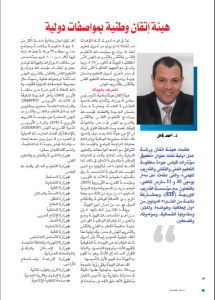
Diplomacy Magazine publishes a comprehensive report on ETQAAN AUTHORITY – Issue No. 345 (April 2026), pp. 86–89
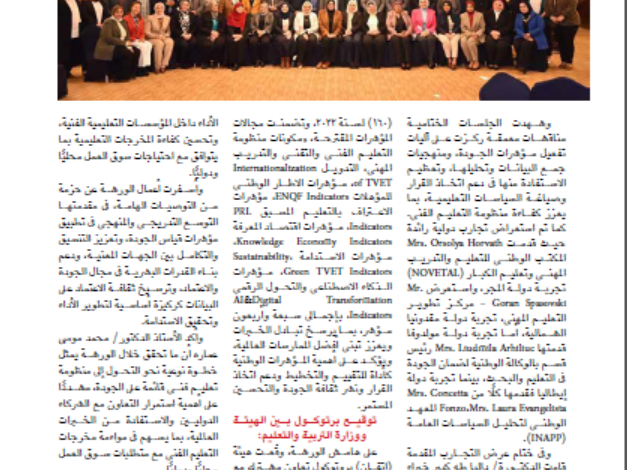
Diplomacy Magazine publishes a comprehensive report on ETQAAN AUTHORITY – Issue No. 345 (April 2026), pp. 86–89
Click to download the magazine issue
Diplomacy Magazine publishes a comprehensive report on ETQAAN AUTHORITY – Issue No. 345 (April 2026), pp. 86–89
ETQAAN: A National Authority Aligned with International Standards
Written by: DR. Ahmed Kamel
A workshop organized by ETQAAN Authority titled “The Use of Quality Measurement Indicators for the (TVET) System,” held on March 30–31, in cooperation with the European Training Foundation (ETF), with the participation of a distinguished group of international experts from Italy, the Netherlands, Hungary, North Macedonia, Moldova, and Palestine.
“We document the internationalization of these indicators, as a continuation of the ongoing efforts to internationalize the accreditation standards for programs and institutions in technical and vocational education and training, which the Authority launched in October 2025. This is in alignment with the current efforts in Egypt to enhance the internationalization of education and to ensure the quality of programs and institutions in technical, technological, and vocational education and training.”
About the Authority:
ETQAAN is a national Authority affiliated with the Prime Minister, with legal personality, responsible for quality assurance and accreditation of (TVET) institutions and programs in Egypt.
Since its establishment, the Authority has aimed to operate with a strong international dimension. It has formulated its accreditation standards and review procedures in alignment with the latest international frameworks, drawing on both national and international expertise. It has also established strategic partnerships with key international organizations, notably the European Commission, the European Training Foundation (ETF), and German Agency for International Cooperation (GIZ) To provide further support and international expertise that enable continued progress—striking a balance between national authenticity and international openness, which stands as one of the Authority’s key strengths.
In accordance with its establishing law, one of ETQAAN AUTHORITY’s core mandates is the formulation and development of national quality indicators for the TVET system. This represents a strategic priority, as the digitalization of these indicators serves as a cornerstone for evidence-based assessment, continuous improvement, and informed decision-making.
The Authority has operated in accordance with an ambitious vision and a noble mission, guided by a precise methodological approach, through balanced pathways since its establishment, achieving effective operationalization.
We have succeeded at formation of national committees that included more than 40 governmental, private sector, and civil society entities, along with the organization of 27 workshops attended by over 1,000 experts and specialists from various ministries and authorities, aimed at developing accreditation standards for institutions and programs in technical, technological and vocational education and training, these standards were based on well-established international references, such as the relevant international standards issued by the International Organization for Standardization (ISO), the quality assurance frameworks applied in the European Union (EQAVET), and studies on quality standards and measures in technical education and vocational training issued by the European Training Foundation (ETF) and the (CEDEFOP).
This was in addition to international best practices from several countries, followed by the development of indicators to measure the quality of this system. These standards are aligned with key international references, including:
These committees include representatives from:
- Ministry of Education and Technical Education
- Ministry of Higher Education and Scientific Research
- Ministry of Industry
- Ministry of Planning
- Ministry of Finance
- Ministry of Health and Population
- Ministry of Transport
- Ministry of Defense
- Ministry of Interior
- Ministry of Military Production
- Ministry of Labor
- Ministry of Social Solidarity
- Ministry of Electricity and Renewable Energy
- Ministry of Housing, Utilities, and Urban Communities
- Ministry of Agriculture and Land Reclamation
- Ministry of Water Resources and Irrigation
- Ministry of Petroleum and Mineral Resources
- Productivity and Vocational Training Department (PVTD)
- Central Agency for Public Mobilization and Statistics (CAPMAS)
- Information and Decision Support Center (IDSC) – The Egyptian Cabinet
- General Organization for Teaching Hospitals and Institutes
- National Authority for Quality Assurance and Accreditation of Education (NAQAAE)
- General Authority for Educational Buildings (GAEB)
- Education Development Fund
- Federation of Egyptian Industries (FEI)
- Egyptian Organization for Standardization and Quality (EOS)
- Egyptian Accreditation Council (EGAC)
- Esteemed experts and advisors of the Authority, as well as faculty members at Egyptian universities, technological universities, technological colleges, technical institutes, specialists, and experts in the quality of technical and technological education, and vocational training.
- Representatives of the labor market from private sector institutions across various economic sectors.
- Representatives of civil society organizations concerned with the quality of technical and technological education, and vocational training.
- Representatives of the TCTI project funded by the German Agency for International Cooperation (GIZ).
- In addition to the outstanding efforts exerted by all staff members of ETQAAN authority in preparing and finalizing these standards and indicators in their final form, we extend our deepest appreciation and gratitude to all for their dedicated contributions.
- To ensure Egypt’s position on the international map in this field and to internationalize these standards, analytical and comparative studies and reviews were conducted against international specifications and standards, including:
- ISO 21001:2025
- ISO 29993
- ISO 29994
- ISO 29992
- As well as the European Quality Assurance Framework for Vocational Education and Training (EQAVET), and the experiences of several European and Arab countries.
- This resulted in full alignment between the Authority’s standards and the relevant international ISO standards, a high level of compatibility with the European EQAVET framework, and consistency with the standards of several European countries such as Croatia, Romania, and Greece.
- These standards were presented and officially launched at an event held in cooperation with the European Training Foundation, with the participation of all concerned stakeholders—affirming that our national standards are capable of competing with the best international practices.
Launch of the International Workshop on TVET Quality Indicators
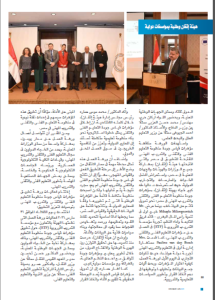
On Monday, March 30, 2026, the Egyptian TVET for Quality Assurance and Accreditation Authority (ETQAAN), chaired by Prof. Dr. Mohamed Mousa \Emarah, in collaboration with the European Training Foundation (ETF), launched the international workshop titled “The Use of Quality Measurement Indicators for the TVET System.”
The workshop brings together international experts from Italy, the Netherlands, Moldova, North Macedonia, Hungary, Palestine, and Egypt, alongside representatives from the Fulbright Commission, the Canadian Embassy, the World Bank, the German Agency for International Cooperation (GIZ), relevant national authorities, and key stakeholders. It was attended by Major General Eng. Mohamed Hassan El-Ezzaby, representing the Minister of Defense, and Prof. Dr. Ahmed El-Gyoushy, representing the Minister of Higher Education and Scientific Research.
The workshop aimed to discuss the proposed TVET quality measurement indicators to be applied in Egypt, which are developed by ETQAAN authority in collaboration with all relevant ministries, authorities, and stakeholders. It also reviewed best international practices and experiences. Dr. Dalia Taha, Senior Expert at ETQAAN authority, presented “TVET Quality Measurement Indicators System in Egypt: Towards Data-Driven Internationalization,”, while Mr. Mihaylo Milovanovitch, Senior Human Capital Development Expert – Leader of Monitoring and System Performance Team, shared the European Training Foundation’s experience in implementing TVET indicators. Mrs. Pauline van den Bosch, Senior Administrative Consultant in Vocational Education and Training, presented the Netherlands’ experience.
Prof. Dr. Mohamed Mousa Emarah, Chairman of ETQAAN authority, highlighted in his opening remarks that launching TVET quality measurement indicators represents a strategic step towards building an integrated education system based on international standards, enhancing graduates’ competitiveness in local and global labor markets.
He added that this workshop marks a significant milestone in transition from framework setting to actual implementation, and systematic measurement step. The results of TVET quality assessment are no longer merely circulated data but constitute a comprehensive system based on nationally developed indicators aligned with international standards, supported by real data and continuous measurement. This approach provides a vital tool for identifying strengths, diagnosing gaps, addressing them, and developing evidence-based policies.
Prof. Dr. Emarah emphasized that since its establishment, ETQAAN authority has sought to balance national identity with international openness by developing quality standards and indicators aligned with the latest global systems, in partnership with major global institutions.
He also noted that internationalizing quality measurement indicators serves as a true compass for performance evaluation and evidence-based decision-making, ensuring that their application will bring a qualitative leap to Egypt’s TVET system.
The workshop will continue for two days, featuring broad participation from relevant ministry representatives, international TVET experts, leaders of the Military Technological College, presidents of public and private technological universities, and representatives of industrial entities interested in developing TVET system.
“ETQAAN” Authority Concludes Workshop on the use of Quality Indicators for TVET with Recommendations to Enhance Application
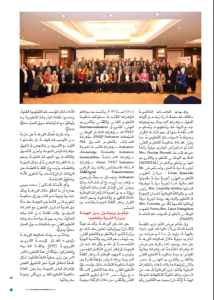
The workshop organized by the Authority in cooperation with the European Training Foundation (ETF) concluded on Tuesday, March 31, 2026. The workshop focused on the use of quality measurement indicators in the (TVET) system, with the participation of elite international experts and representatives from relevant national entities.
The event was attended by Dr. Hassan Tahsin, Director of the National Transport Institute, representing the Minister of Transport, and Dr. Amr Bosila, Head of the Central Administration for Technical Education Development, representing the Minister of Education and Technical Education.
The closing sessions witnessed in-depth discussions on mechanisms for activating quality indicators, data collection and analysis methodologies, and maximizing their use in supporting decision-making and formulating educational policies to enhance the efficiency of the TVET system.
Leading international experiences were reviewed, including:
- Hungary: Presented by Mrs. Orsolya Horvath from the National Office of Vocational Education and Training and Adult Learning (NOVETAL).
- North Macedonia: Presented by Mr. Goran Spakovsky from the Vocational Education Development Center.
- Moldova: Presented by Mrs. Liudmila Arhiliuc, Head of Department at the National Agency for Quality Assurance in Education and Research.
- Italy: Presented by Mrs. Concetta Fonzo and Mrs. Laura Evangelista from the National Institute for Public Policy Analysis (INAPP).
National Quality Indicators for Egypt
Dr. Dalia Taha, Senior Expert of the President of ETQAAN authority, summarized the international experiences presented over the two-day workshop. She presented a proposal for 47 national indicators designed to measure the quality of Egypt’s TVET system. These indicators were developed in alignment with international standards and national experiences, fulfilling ETQAAN AUTHORITY’s mandates under Law No. 160 of 2022.
The proposed indicators cover several key areas:
- TVET System Components.
- Internationalization of TVET.
- Egyptian National Qualifications Framework (ENQF) Indicators.
- Prior Recognition of Learning (PRL) Indicators.
- Knowledge Economy Indicators.
- Sustainability and Green TVET Indicators.
- AI and Digital Transformation Indicators.
In total, there are forty-seven indicators, which foster the exchange of expertise, promote the adoption of global best practices, and emphasize the importance of national indicators as tools for evaluation, planning, supporting decision-making, and spreading a culture of quality and continuous improvement.
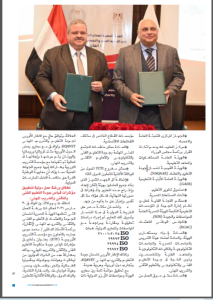
Signing of a Cooperation Protocol with the Ministry of Education and Technical Education
On the sidelines of the workshop, ETQAAN Authority signed a joint cooperation protocol with the Ministry of Education and Technical Education. This protocol aims to: support specialized vocational development in quality assurance systems and mechanisms, enhancing institutional integration and unify national efforts, and promote the culture of quality, as well as building qualified cadres capable of leading the accreditation process within technical education institutions, align with Egypt Vision 2030 in development of technical and technological education, by improving technical institutional performance and efficiency of educational outcomes meeting local and international labor market needs.
The workshop concluded with a set of vital recommendations, most notably: Firstly, the gradual and systematic expansion of quality measurement indicators implementation, enhancing coordination and integration among all relevant stakeholders, support building human capacity in the fields of quality and accreditation, establishing a culture of data-driven development as a pillar for performance improvement and sustainability.
Prof. Dr. Mohamed Mousa Emarah emphasized that the workshop’s outcomes represent a qualitative leap toward a quality-based TVET system. He stressed the importance of continued collaboration with international partners to align educational outputs with the evolving requirements of the global and local labor markets.
He concluded by thanking the ETF and all participating experts, noting that this fruitful cooperation has yielded practical insights that serve as a strong starting point for the actual implementation of quality measurement indicators which enhances TVET System efficiency and improves the quality of its outputs.